Easier Browser Permission Management
Browser permissions can get repetitive quickly. Camera, microphone, location, notifications, and clipboard access all need careful checks, graceful fallbacks, and clear user-facing states.
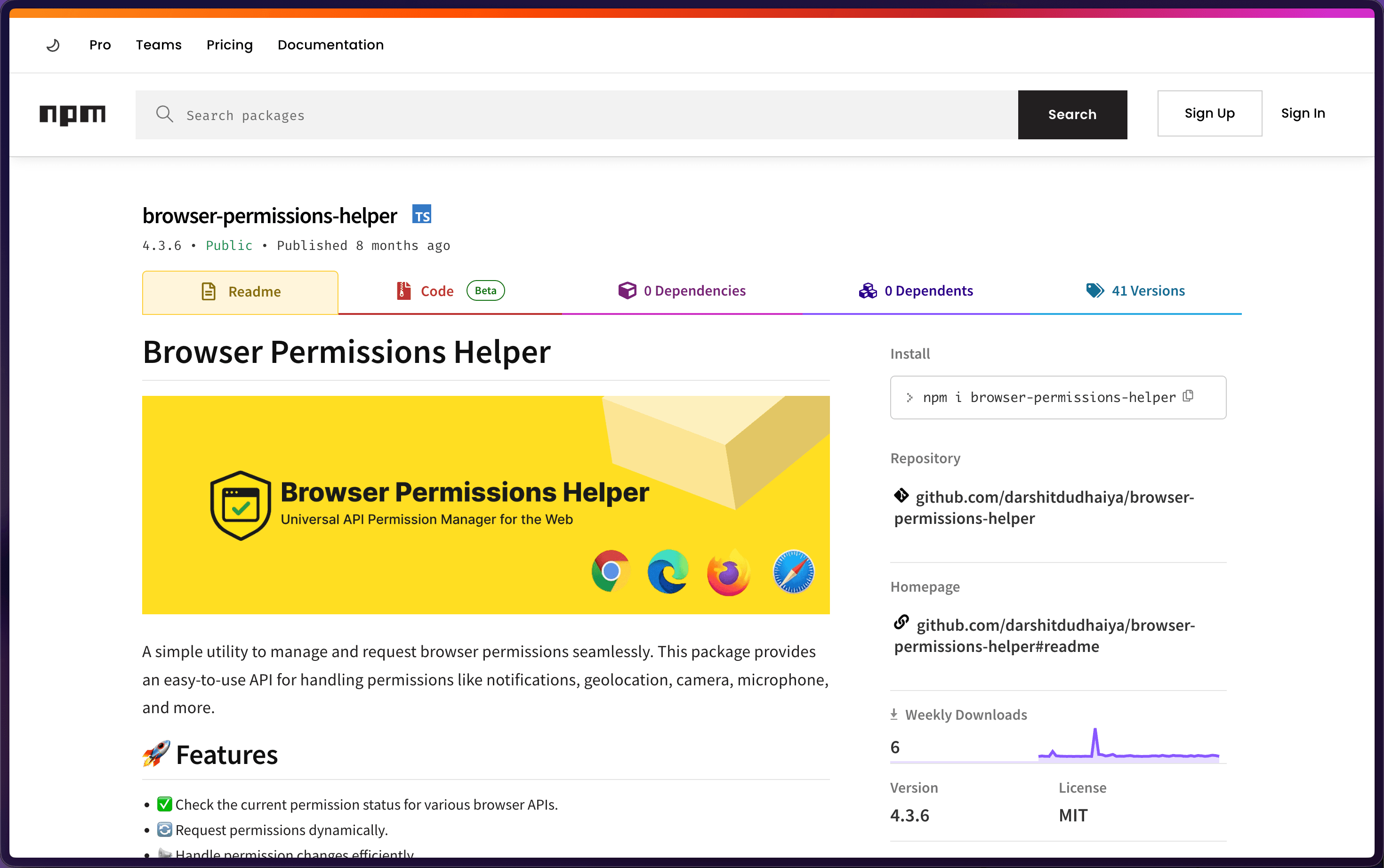
browser-permissions-helper is a lightweight TypeScript package I built to simplify that workflow. The goal is simple: make permission checks and request handling easier without adding a heavy abstraction.
The Problem
Most web apps need the same permission flow again and again:
- Check whether a permission is already granted.
- Ask for access only when the user action needs it.
- Handle denied, granted, and unsupported states.
- Keep the UI state in sync with the browser result.
- Avoid writing the same browser API checks in every feature.
That boilerplate slows teams down and makes permission flows inconsistent across an app.
The Package Approach
The helper keeps permission management small and predictable. Instead of scattering browser API logic across components, developers can centralize common checks and request flows behind a typed utility.
That makes the code easier to read, easier to reuse, and easier to test. It also improves the user experience because permission prompts happen in the right place, with fewer surprising edge cases.
Why It Helps
The package reached 1,500+ downloads within 6 months and reduced implementation effort by up to 60% for common permission flows.
It is especially useful when an app needs multiple permissions and wants one consistent approach instead of separate custom code for every feature.
Developer Experience
The library focuses on a few practical ideas:
- Minimal TypeScript API.
- Lightweight package size.
- Clear permission states.
- Easier integration in modern web apps.
- Less duplicate code around browser APIs.
Small utilities like this are valuable because they remove the repeated work around a narrow but common problem. Developers can spend more time building the feature and less time wiring permission plumbing.